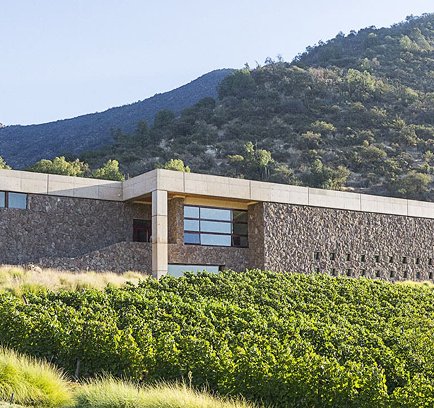
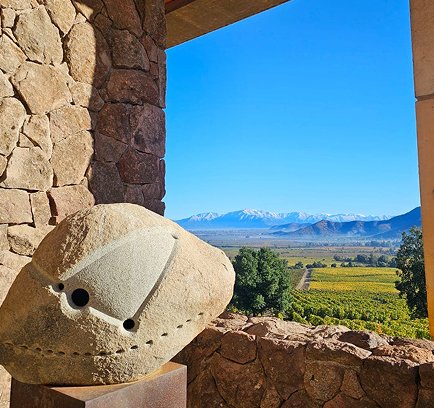
With contemporary architecture, this imposing winery was built in 2001 by the renowned Chilean architect, Samuel Claro, who sought with this design diffuse with the beauty of the surroundings mountain range, locating it in the foothills of the Cordillera de the Andes which allows you to perceive a privileged view to the valley.
At the same time, it is said that wine is art, because of this inside the winery you can find several artistic pieces by renowned national and international artists international, who have given this facility a key meaning regarding art.
For its part, the famous sculpture found at interior, was built by Francisco Gacitúa, a renowned Chilean artist who sought to represent the Eagle Constellation. This constellation, small and beautiful, it is located in Ecuador and can be observed from the Southern Hemisphere in the months of August and September, just when the vine buds They begin to wake up after winter. This constellation can not only be interpreted through sculpture, but also on the label from the greatest exponent of icon wines, Altaïr, where Sammy Benmayor, renowned Chilean painter, shows in its design the reflection of the Constellation of the Eagle next to its brightest star, which in this case corresponds to the one that bears the same name as the wine, Altaïr.
CUTTING EDGE
Techniques & technologies
at Cachapoal Andes
Next-generation fermentation
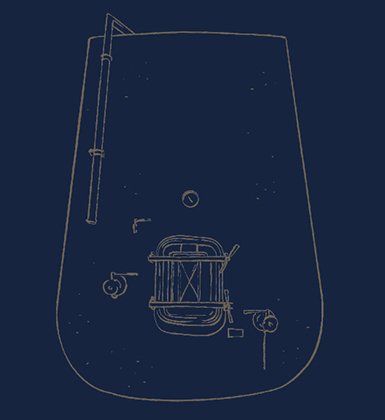
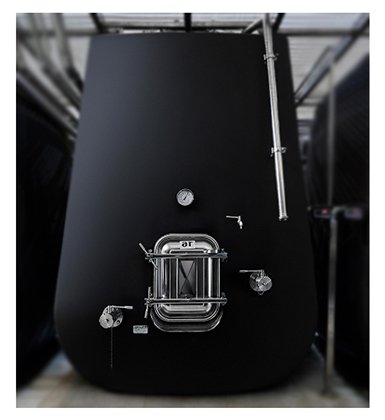
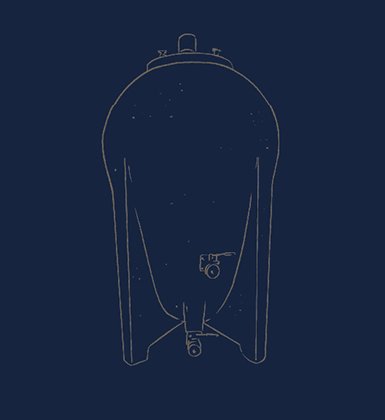
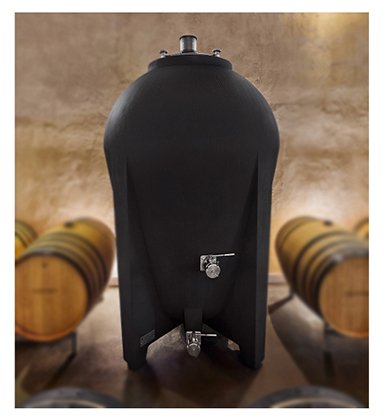
NICOVELO TULIP
QUANTITY IN THE CELLAR: 24.
CAPACITY: 4000 and 6000 litres.
HIGHLIGHT: the material, concrete, and the wall-heating design of these tanks help ensure that fermentations are highly controlled and natural. The temperature gradually increases and remains stable at around 24 degrees celsius throughout the entire fermentation. This facilitates optimal extraction and makes it more sustainable (less thermal energy is used during fermentation).
VARIETIES IT IS USED FOR: Cabernet Sauvignon.
Next-generation ageing
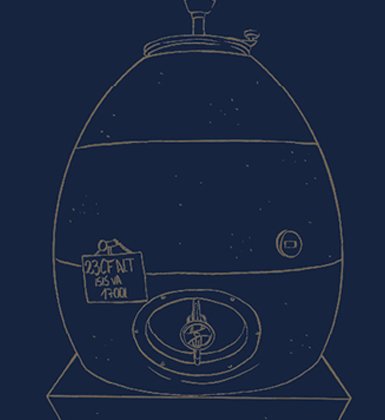
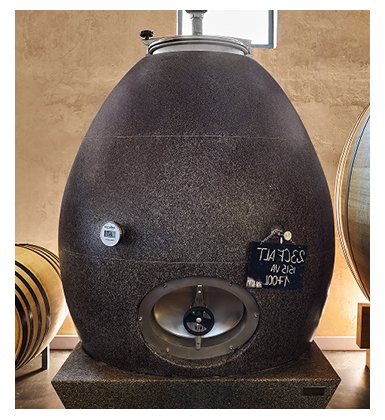
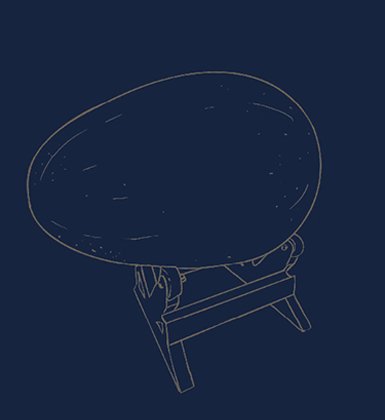
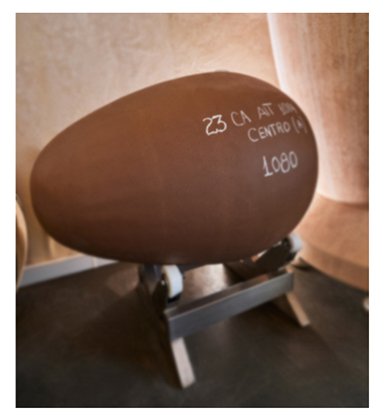
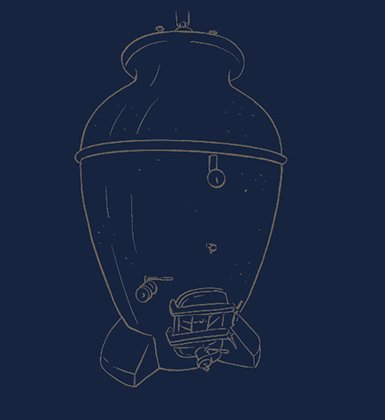
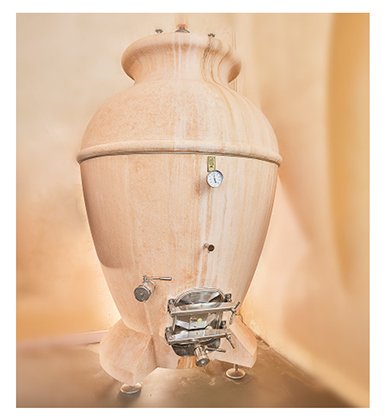
GRANITE EGG
QUANTITY IN THE CELLAR: 1.
CAPACITY: 1700 litres.
HIGHLIGHT: it features a unique reductive capacity, ensuring the palate has tension and long tannins.
VARIETIES IT IS USED FOR: Cabernet Franc.
Next-generation fermentation
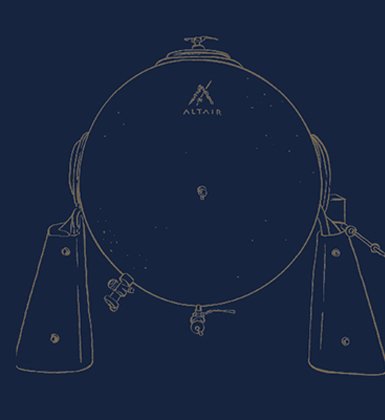
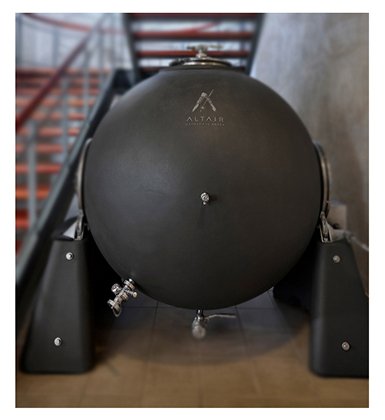
ROTATING GALILEO
QUANTITY IN THE CELLAR: 1.
CAPACITY: 1500 litres.
HIGHLIGHT: winemaking is possible without using electricity; instead, the solid grape material (pomace) or lees can be kept in contact with the wine through the movement of the Galileo because of its gear and crank system. This helps to round out the tannins, enhance the body and add weight to the palate.
VARIETIES IT IS USED FOR: Cabernet Sauvignon and Cabernet Franc.
Next-generation ageing
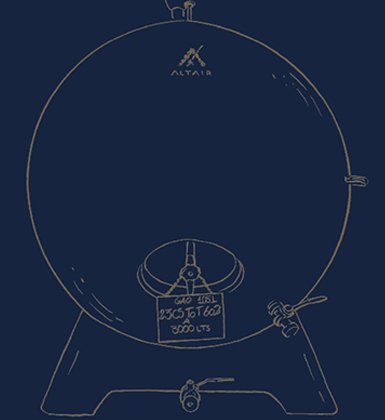
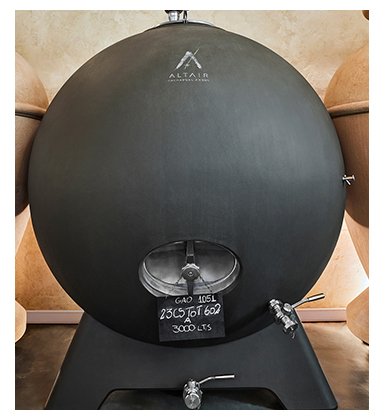
STATIC GALILEO
QUANTITY IN THE CELLAR: 1.
CAPACITY: 3000 litres.
HIGHLIGHT: this is among the containers with the highest thermal inertia that we have in our cellar (lower energy exchange with the environment). Furthermore, it has a very low oxidative level, ideal for keeping the wine fresh and lively.
VARIETIES IT IS USED FOR: Cabernet Sauvignon.
Next-generation fermentation
CERAMIC EGG
QUANTITY IN THE CELLAR: 6.
CAPACITY: 300 litres.
HIGHLIGHT: this container is more oxidative, which is ideal for the evolution and polymerization of tannins.
VARIETIES IT IS USED FOR: Carmenère.
Next-generation fermentation
AMPHORAE
ITALIAN CLAY
QUANTITY IN THE CELLAR: 6.
HIGHLIGHT: more oxidative container, shorter ageing period of around 12 months.
VARIETIES IT IS USED FOR: Cabernet Sauvignon.
Next-generation fermentation
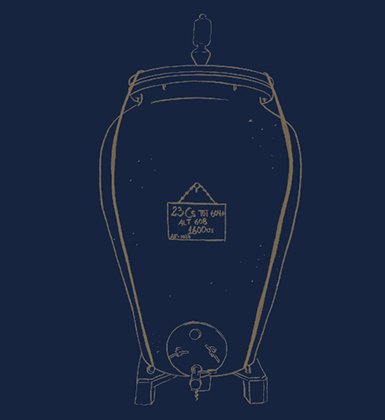
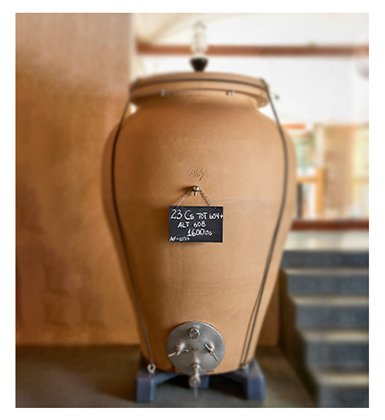
AMPHORAE
COCCIOPESTO: clay with lime and quartz (material used to build aqueducts in the Roman Empire).
QUANTITY IN THE CELLAR: 3.
CAPACITY: 1800 litres.
HIGHLIGHT: these containers bring tension, freshness and length to the palate to the wines.
VARIETIES IT IS USED FOR: Cabernet Sauvignon.
Next-generation fermentation
DOLIUM
QUANTITY IN THE CELLAR: 3.
CAPACITY: 1300 litres.
HIGHLIGHT: inverted egg, ideal for ageing Syrah, retaining the grape’s characteristics and fruit flavours in the wine.
VARIETIES IT IS USED FOR: Syrah.
Gabriel Mustakis
Winemaker of San Pedro Cachapoal Andes Icon Wines
His passion for wine and the vision of the Iconic Wines of Viña San Pedro, led him to accept the challenge of taking his position in the Cachapoal Andes winery and the production of our great wines.
This agronomist, with specialization in Viticulture and Oenology at the Catholic University of Chile, reaches Viña San Pedro after a long and fruitful winemaking career developed both in our country and in important valleys abroad.